Why Textured Wall Art Makes Compact Rooms Feel Larger
In a small apartment or a narrow hallway, every inch of wall space matters. Flat artwork often gets lost against the wall, while bulky furniture eats into the floor plan. Textured wall art offers a middle ground: it adds visual interest without stealing square footage. This effect is especially useful when working with compact botanical wall decor, where the goal is to bring nature indoors without overwhelming the room.
Texture works by catching light and shadow differently than a flat surface does. A preserved moss panel, for example, has a soft, dimensional surface that changes appearance depending on the time of day and the angle of light. That shifting look draws the eye upward and outward, making a small room feel more expansive. The effect is subtle but real: a textured wall piece can break up a long, blank stretch of wall without adding visual clutter.
How texture changes a room's proportions
When you hang a flat painting or a print on a compact wall, the wall still reads as flat. The artwork sits on top of it, but the overall surface remains two-dimensional. Textured wall art, by contrast, creates a series of micro-highlights and shadows across its surface. That three-dimensional quality tricks the eye into perceiving more depth than is actually there.
This principle is the same one interior designers use when they specify a rough plaster finish or a woven wall hanging. The texture gives the wall a tactile quality that invites a second look. In a compact office or a small bedroom, that extra layer of visual interest can make the space feel more finished and less cramped.
Compact botanical wall decor: a natural choice
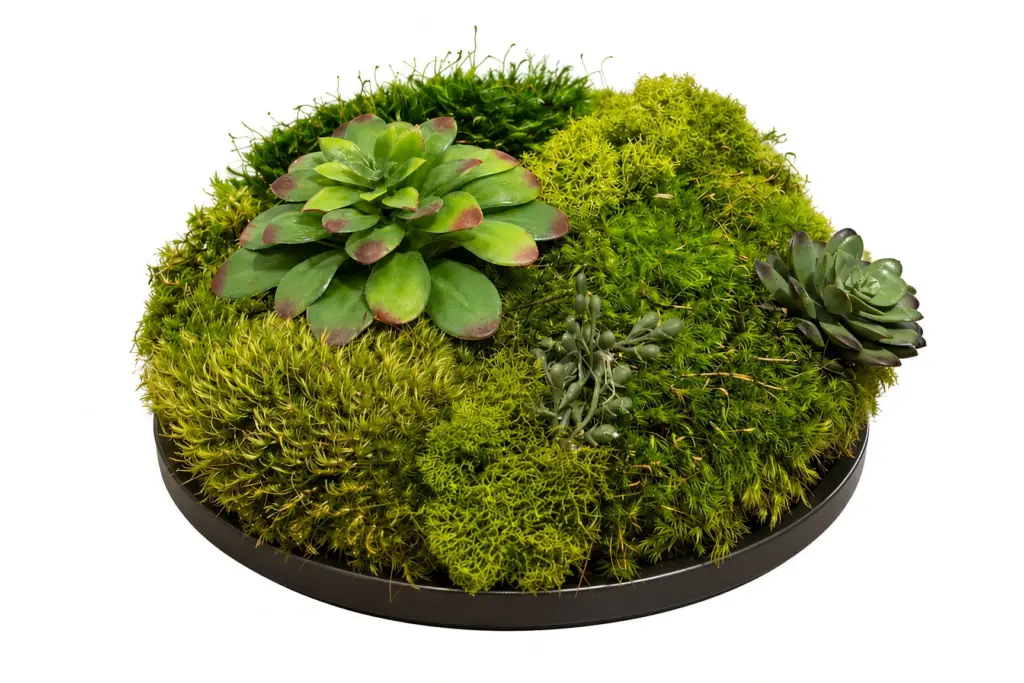
Botanical themes are a natural fit for textured wall art. Leaves, moss, and bark already have a rich surface structure, so reproducing them in a textured medium feels authentic rather than forced. Preserved moss panels, for instance, keep the natural variation of real moss: some areas are denser, some are looser, and the colour shifts from bright green to deeper forest tones. That variation adds a living quality that a flat print cannot match.
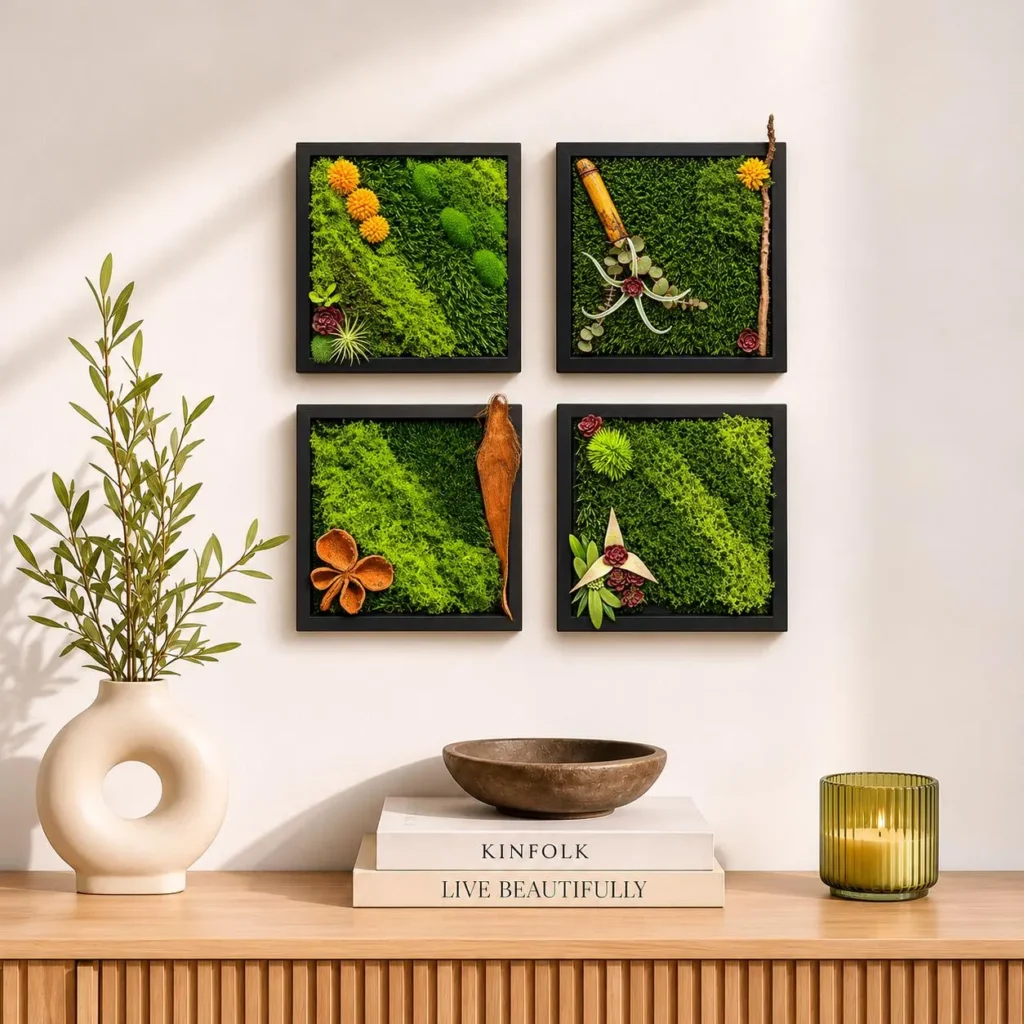
For a small apartment, the key is to choose a piece that stays within the room's proportions. A large, heavily textured panel might overwhelm a tiny wall, while a series of smaller textured squares can create a rhythm that draws the eye across the room. The same principle applies to vertical space: a tall, narrow piece of textured wall decor can make a low ceiling feel higher by leading the eye upward.
Practical considerations for small spaces
Not all textured wall art works equally well in compact rooms. Some materials absorb too much light and make a space feel darker. Others are too heavy for a drywall anchor. Here are a few things to consider when choosing a piece:
- Weight and mounting. A preserved moss panel is lightweight compared to a framed canvas or a metal sculpture. That makes it easier to hang on a single wall anchor, even on a thin partition wall.
- Lighting. Texture needs light to be visible. If a room has only overhead lighting, a textured piece might look flat. Adding a small picture light or a directional lamp can bring out the shadows and highlights.
- Colour tone. Dark textures can absorb light and shrink the room visually. Lighter greens, beiges, and soft greys reflect more light and keep the space feeling open.
Another factor is the material's maintenance. Flat prints need dusting and occasional glass cleaning. A preserved moss panel requires almost no upkeep: it does not need water, soil, or trimming, and it stays fresh-looking for years with just an occasional gentle dusting. That low-maintenance quality is a real advantage in a compact room where cleaning can feel like a chore.
Where to place textured wall art in a small home
Location matters as much as the piece itself. In a narrow hallway, a single textured panel hung at eye level can break up a long, blank wall and create a focal point. In a compact office, a textured piece above the desk can add a calming botanical element without taking up desk space. A small bathroom often benefits from a textured wall hanging because the natural surface resists the moisture in the air better than paper or canvas would.
One common mistake is to crowd a textured piece with other wall decor. In a small room, less is more. A single textured panel or a pair of matching panels can do more for the space than a gallery wall of small frames. The texture itself provides enough visual interest; competing elements just add visual clutter.
Another effective placement is in a corner where two walls meet. A textured piece placed at the corner can soften the hard line and make the room feel more organic. That trick works especially well with compact botanical wall decor, where the natural forms echo the shapes found in plants and leaves.
The role of scale and repetition
When working with a small room, scale becomes critical. A single large textured panel can anchor a room, but it can also dominate it. A set of smaller panels arranged in a grid or a staggered pattern can create a sense of rhythm without overwhelming the space. That approach works well in a compact office or a small studio where the wall is narrow but the ceiling is high.
Repetition of texture can also help. If the room has a textured throw pillow or a woven rug, a textured wall piece in a similar material or colour palette can tie the elements together. That visual continuity makes the room feel larger because the eye moves smoothly from one surface to the next. The brand WooPay offers a range of preserved moss panels that fit this approach. Their panels come in natural tones that coordinate with most interior palettes, and the light weight makes them easy to arrange in a custom layout. In a small apartment, that flexibility is a real advantage.
Why natural texture works better than synthetic
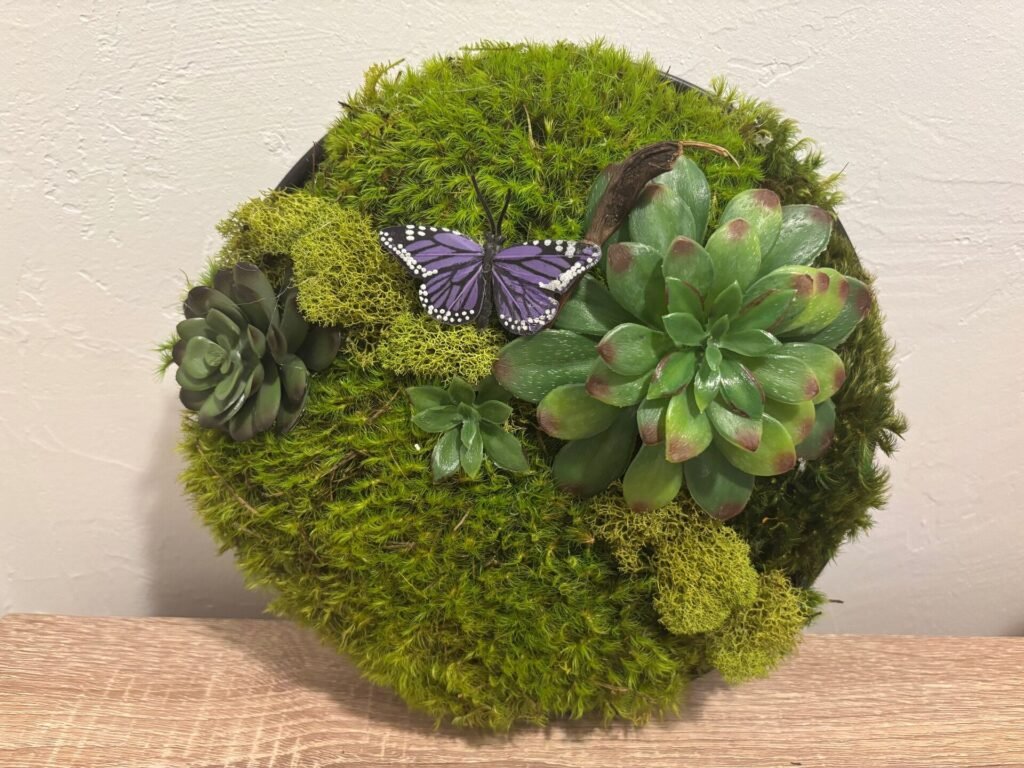
Artificial textures, like plastic moss or printed fabric, often look flat under direct light. The surface lacks the micro-variation that makes natural texture convincing. Preserved moss, by contrast, keeps the exact surface structure of the living plant. Under a lamp or natural daylight, the tiny leaves and stems cast their own shadows, creating a depth that a synthetic material cannot replicate.
That depth is what makes textured wall art effective in compact rooms. A flat wall feels like a boundary. A textured wall surface feels like it extends beyond the physical plane. That perceptual shift is small, but in a small room it can make the difference between a space that feels boxed in and one that feels open and calm.
Bringing it all together
Textured wall art is not just a trend for large lofts and open-plan homes. It works especially well in compact spaces because it adds depth, softens hard lines, and brings a natural element indoors without taking up floor space. Whether you choose a preserved moss panel, a woven wall hanging, or a textured ceramic piece, the key is to match the scale and colour to the room's proportions. A little thought about placement and lighting can turn a small wall into a striking feature.
For anyone living in a small apartment or working in a compact office, textured wall decor offers a practical way to add personality and calm. The effect is quiet but real. And with options like those from WooPay, it is easy to find a piece that fits both the wall and the budget.